23-24

a
a
- ‘9756889’ Digital work printed on velvet 180×140 cm (Unique work)
- ‘456767899’ Digital work printed on velvet 180cmx140cm (Unique work)
- ‘786567828’ Digital work printed on velvet 90 mx 90cm (Unique work)
- 786567828′ Digital work printed on velvet 140cmx140cm (Unique work)
- ‘876578699’ Digital work printed on velvet 140cmx90cm (Unique work)
a
a
a
If the works in 2022-2023 were defined by the transition from traditional mediums towards the digital and the discourse that deals with the acceptance of such (providing grounds for the article ‘The referential and the network -art in the age of digital reproduction’), the familiarisation with the potential brought through technological advancements ushered an entirely different directive within the domain of production.
The interesting dimension that emerges is tightly connected to faculty of the real and value of the work as by painting on a pad -a digital medium that challenges its predecessors is employed as a tool in creation of blue print that is subsequently is printed on velvet with the emphasis on keeping the ‘aliveness’ of the original work.
The works take another direction where taking a step away from the musings and contemplation upon the origins ( a process that has culminated in the book on origin of life and consciousness) changes the focus towards a female-centred narrative.
Initially the works were entirely hand drawn, however the offerings provided by feeding own work to AI software provided interesting suggestions within the desired scope, thus changing the directionality of the ouevre.
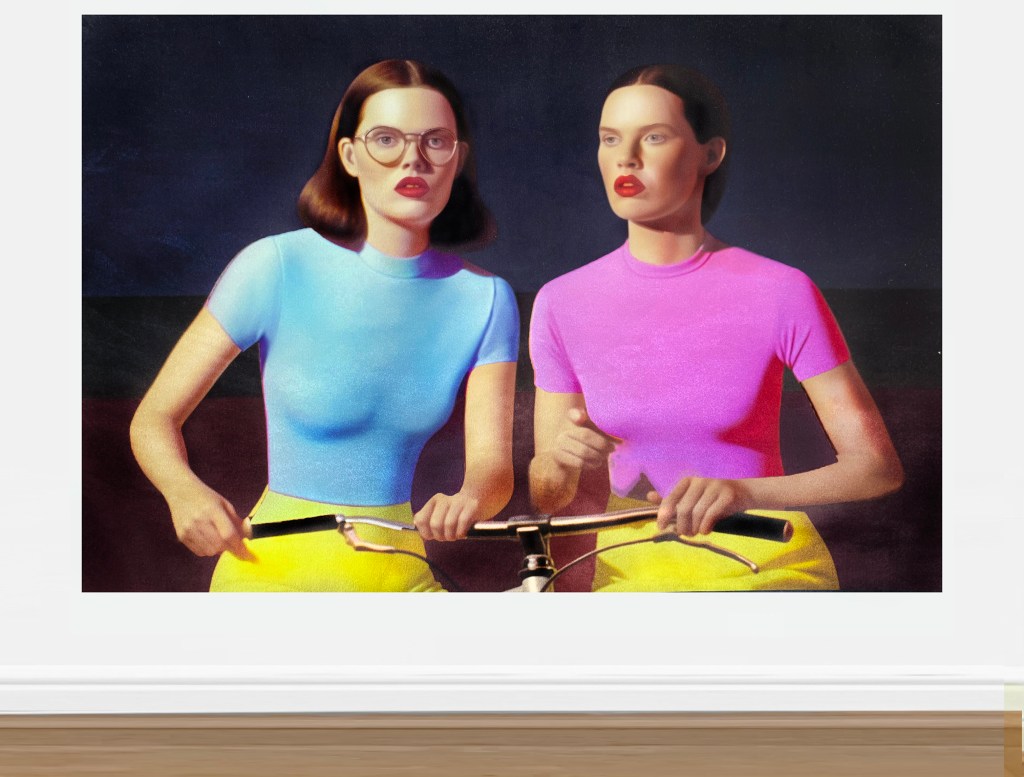
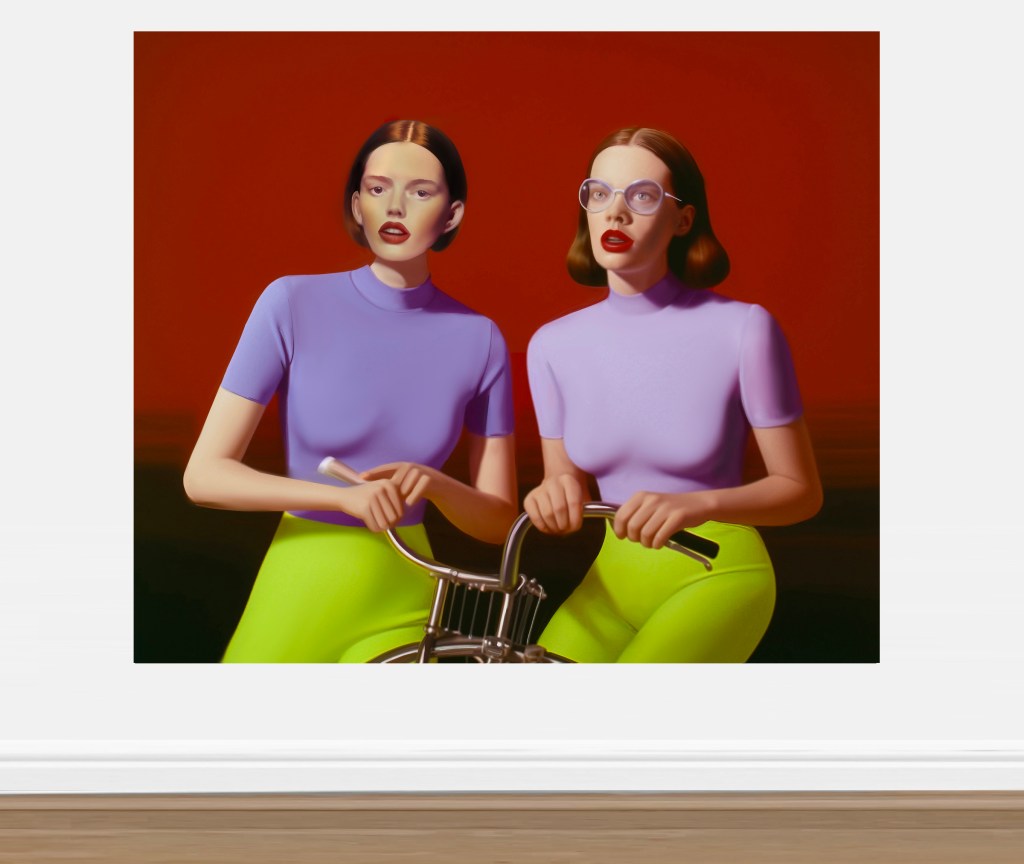
In that manner the latest works tackle the relationship between production and reproduction, digital and analog world where through the repetitive motive the portraits of women on bicycle(s).
Their faces are captured within the scope of discourse and a feeling of encounter with something in front of them – hidden to the viewer- yet apparently palpable as a this aspect of ‘dealing’ is clearly portrayed in their facial expressions. In that manner this ‘menage-a troise- offers an insight into a narrative that touches upon the fact that although someone’s journey may visible to the outside world, the contents are difficult to discern other than to those who are involved in the situation.
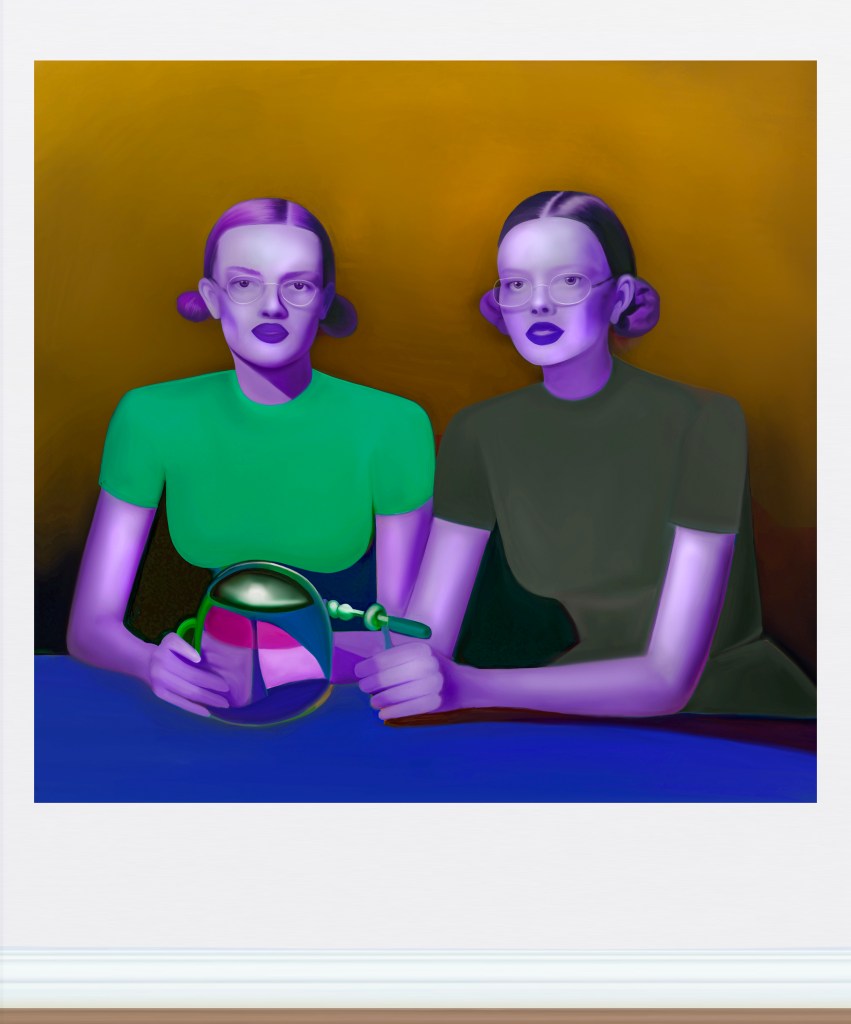
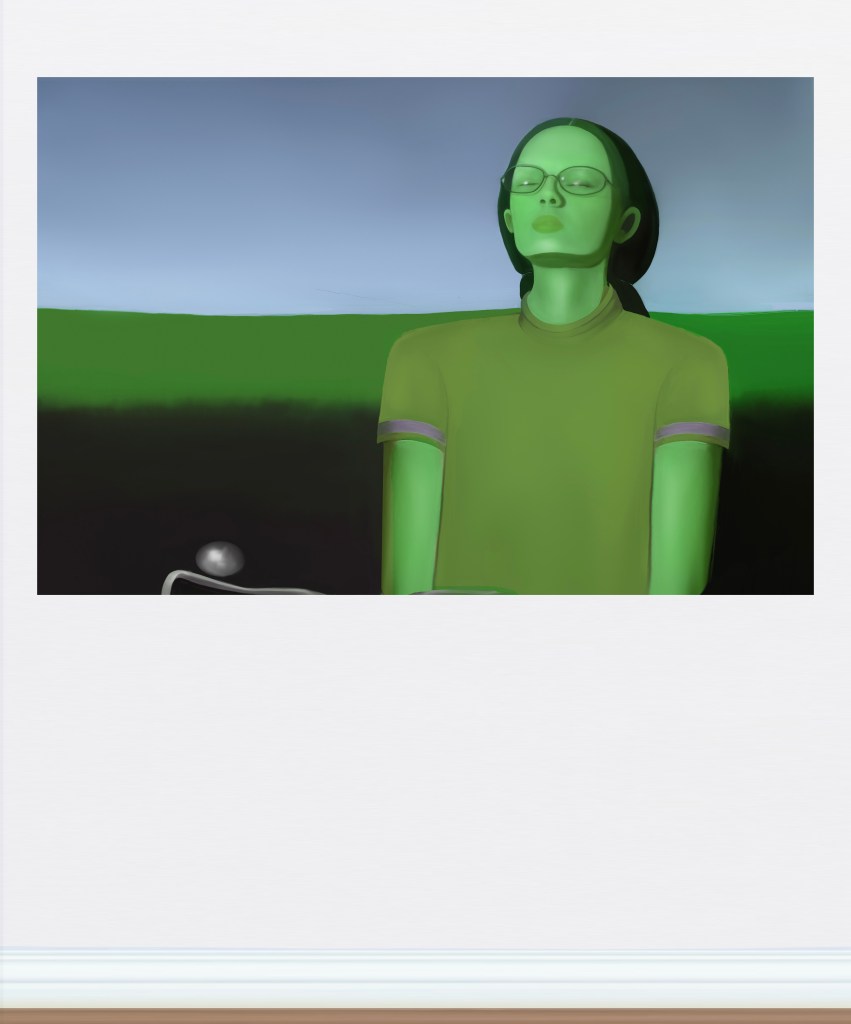
When it comes to the content of feminine within the discipline, it is almost consistently tied to the female sexuality – either as a rejection of the imposed order and gaze – or as an embrace of such. However, the artist wanted to explore the politics of female bodies and faces outside the ‘desire’ content, establishing an entirely new route when it comes to the representation of female gender in art. The backgrounds are left simple and work with the material employed (velvet) and so is the portrayed attire – a deliberate step away from the characteristically ornamental depictions and their fetishisation (clothes, make up, accessories, specific color paletts) often evoked in most female work.
As such, the focus is centred around the portrayed faces, their bodies and the interpretation of such as the artist deals with the aspects of exposure, absorption and recognition within the navigational scope both within her own existence but also on the global spectre.
The bikes that are tools employed within the navigational context sometimes evoke the feeling of Croneberg’s ‘tools for operating on mutant women’ and sometimes look like musical instruments, sometimes unified and sometimes separated as to reflect the degree of unification of the represented figures.
Whilst women on bicycles can be regarded as a main theme within the oeuvre, the work is somewhat two fold (mirroring the vertical scar at the centre of her forehead – a token acquired on the day of her baptism).
The other aspect comes across as more frivolous as it indulges in the very same ornamentation and ‘gaudiness’ that women have often been criticised and ostracised for. In that manner the entire body of work exists within the acceptance of the multiplicity and the complexity of the human nature and the recognition of the myriad of platous that define the existence, whilst simultaneously pointing out the aspect of the double that pervades artists work and are in that manner aligned with the scar on the centre of the artist’s forehead.
a
a
a
a
a
 I.La
I.La 